
How to Build a World That Bleeds, Burns, and Belongs to Your Fans
In the age of autoplay and 15-second hooks, crafting a concept album is a declaration of war against disposable TikTok hits and fleeting singles.
From Creeper’s post-apocalyptic gothic love story soaked in velvet tragedy and American myth, to Twenty One Pilots’ psychological warfare, where self-doubt wears a mask and songs are battles fought in real-time, to My Chemical Romance’s operas of ghosts, glam, and gasoline-soaked grief — the greatest concept albums are never just collections of tracks.
They are experiences, meant to be lived, not just listened to.
These albums transform artists into architects. They invite listeners into something bigger than themselves: a place to feel, to collapse, to resurrect. And for the creators, they’re more than just a body of work.
This is a no-fluff, musician-focused breakdown of how to craft your concept album’s story arc from the inside out — complete with narrative scaffolding, emotional engineering, live performance integration, motif mapping, and the worldbuilding techniques used by some of the most enduring concept records of the modern era.
Think Like a Director, Not Just a Songwriter
When approaching a concept album, it’s essential to shift your mindset: each track serves as a narrative moment, a distinct chapter in a larger story. Your album, in its entirety, becomes a film in audio form, one that demands attention to character development, worldbuilding, atmosphere, and emotional evolution.
This doesn’t mean every song has to follow a strict plot point, but it does mean that each song should serve a purpose within a carefully constructed arc. Whether your protagonist is you, a fictionalised persona, or a symbolic vessel for the album’s themes, their journey needs to feel intentional.
One of the strongest modern examples of this approach is Creeper’s Sex, Death & the Infinite Void. This isn’t just a collection of goth-tinged anthems and theatrical flourishes. It’s the story of a fallen angel who crash-lands in a surreal town in California, inspired by Dunsmuir and the haunting dream-logic of Twin Peaks. Through their eyes, we witness a spiritual unravelling: a divine being experiencing love for the first time — and through it, desire, doubt, temptation, and ultimately ruin.
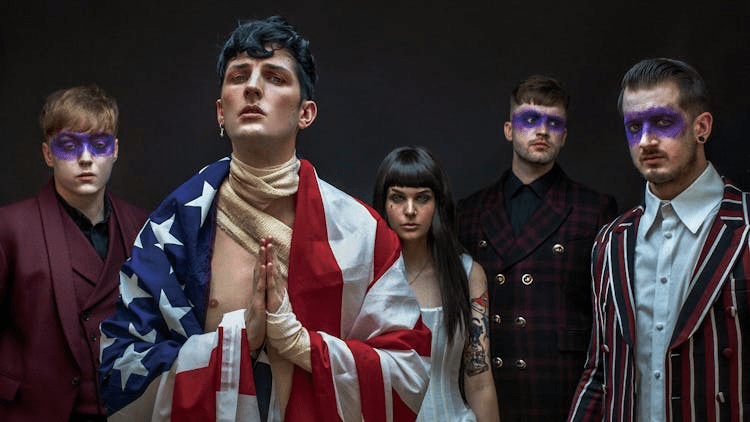
This narrative is carried not only through the lyrics but through every element of the album — from its recurring lyrical motifs and spoken-word sermons to its musical shifts, visual iconography, and carefully sequenced music videos. Each video expands on the story, not just accompanying the songs but building the mythos. Every detail serves the world: the Americana backdrop, the apocalyptic symbolism, the corrupted holiness of Roe himself.
Practical Starting Point: Write the Treatment
Before you touch an instrument or enter the studio, sit down and write a treatment just as a filmmaker would. Your goal is to map out the world your album inhabits, the characters who live in it, and the emotional truth at its core.
Ask yourself:
Where is the album set?
Is it grounded in reality, dreamlike, dystopian, or somewhere in between? The setting will influence not only your lyrical choices but your production decisions — from instrumentation to mixing techniques. A dusty desert town calls for entirely different sonic textures than a sterile digital metropolis.
Who is the protagonist?
Is it a fictional character? A stylised version of yourself? A composite of experiences and fears? Give them substance: What do they want? What are they running from? How do they change — or fail to.
What is the emotional thesis?
Every concept album is underpinned by a central emotional or philosophical question. Are you exploring grief? Shame? Nostalgia? The death of faith? The loss of innocence? Define it clearly, because it will become your North Star. Every lyric, every melody, every structural choice should orbit that emotional centre.
This doesn’t mean every detail must be rigidly mapped out. Ambiguity and abstraction have their place, but the more intention you bring to the foundation, the more coherent and impactful the final experience will be.
By thinking in terms of narrative architecture rather than simply writing song after song, you elevate your project from a playlist to a world your listeners can step into, explore, and get lost inside. And if you do it right, they’ll never want to leave.
Build Your Story Arc: From Origin to Outcry
Act I: Introduction / World-Building
Set the atmosphere. Define the emotional and thematic palette. This is where your world takes shape — visually, sonically, narratively.
Who are we listening to?
Where are we?
And what, exactly, is at stake?
In Danger Days, for example, MCR drops us straight into chaos with “Look Alive, Sunshine”, a crackling pirate radio broadcast that shoves us into a hyper-saturated, post-apocalyptic future ruled by neon, nihilism, and rebel noise.

Your tools here aren’t just melody and lyrics, there’s texture: static, ambient noise, spoken word, tape hiss, choir pads, dissonance, even silence. Make the opening a threshold, something a listener crosses through.
Act II: The Conflict Emerges
Now that we’ve entered the world, it’s time to crack it open.
This is where the central tension is introduced. The mask slips, the questions rise, and the protagonist begins their descent, ascent, or slow unraveling. Identity fractures, and the narrative kicks into motion.
In Blurryface, Twenty One Pilots set up duality as the main thread: “Stressed Out” may sound playful, but it is the first track in, what will become, an every evolving world where we are first introduced to the character of Blurryface.
Act III: Climax / Collapse
This is the turning point. The emotional high watermark. The revelation, confrontation, or death that changes everything.
At this point in your album, the narrative reaches its most critical intensity — the mask slips, the center breaks, the truth is laid bare. This is the scene where your protagonist is either destroyed, transformed, or exposed. It doesn’t have to be literal — but it must feel irreversible.
The climax is often the album’s boldest statement, thematically or sonically. It might be explosive, chaotic, cathartic. Or it might be unsettlingly quiet. What matters isn’t volume, but emotional gravity. This is where your listener should feel something shift.
By now, your audience has travelled with you. They’ve stepped inside your world and accepted its rules. This is where you show them why the story needed to be told. What was buried under the surface finally rises. What was hidden becomes impossible to ignore.
Don’t hold back.
Act IV: Falling Action / Fallout
After the climax, something breaks, and what remains must be processed. This act is about aftermath: grief, reckoning, withdrawal, or quiet transformation.
In Trench, “Bandito” and “Leave the City” offer a slow-burning escape. There’s no big explosion, no triumph, just a heavy, earned departure.
Use this space to let the emotional dust settle. Reflect. Let the listener exhale or sit in the quiet discomfort of unresolved tension.
Act V: Resolution (or Ambiguous End)
Here’s where your story lands or lingers. Some albums resolve. Others haunt. Either is valid, but the ending must mean something.
The Black Parade ends with “Famous Last Words”, one of the most anthemic and emotionally charged closers in modern alt-rock.
This final act isn’t necessarily about tidying things up. It’s about resonance. What do you want the listener to carry with them once the music ends?
Recurring Motifs Are Your Narrative Glue
A concept album lives or dies by its cohesion, and that’s where motifs come in. Think of them as the connective tissue, the stitching that holds your story together across time, tone, and tracklist. These aren’t just repeated sounds or lyrics — they’re symbols, phrases, melodies, and images.
Motifs can be lyrical; a recurring colour, a name, a metaphor, a phrase that evolves in meaning each time it returns. They can a melody that resurfaces in a darker key, a riff that shows up warped and decayed, a drum pattern that echoes like a pulse through the whole album.
Used well, motifs create emotional echoes. They reward repeat listens by offering deeper connections on each pass, like narrative breadcrumbs guiding listeners through your maze.
The trick is subtlety. Don’t copy-paste. Let your motifs grow with the character, shift with the tone, unravel as the story deepens. The more your symbols evolve, the more your album feels alive, not just a collection of tracks, but a living, breathing story that loops in on itself.
Using Social Media as Your Narrative Playground
Successful concept albums don’t stop when the record ends… they spill out into tweets, Instagram posts, videos, and more, offering fans a chance to dive deeper, speculate, and participate.
Bring Me The Horizon’s innovative approach with their Post Human era — particularly the launch of their Nex Gen website, a digital experience that fuses storytelling, immersive visuals, and interactive elements. The site is a carefully crafted environment where fans explore themes from the album through puzzles, hidden Easter eggs, and dynamic content updates. This approach turns passive browsing into active exploration, deepening fans’ connection to the album’s dystopian themes and futuristic soundscapes.
Similarly, the Blurryface era by Twenty One Pilots used an interactive social media campaign that blurred the line between fiction and reality. The band’s official Blurryface Twitter account adopted the persona of the album’s antagonist, posting cryptic and ominous messages that echoed the album’s themes of anxiety and self-doubt. This approach transformed social media into a narrative device, giving fans a front-row seat to the psychological battles underpinning the music.
How to Use Social Media and Digital Platforms to Build Your Concept
- Create Character Accounts or Alternate Personas:
Give your characters a digital life. Let them tweet, post, or share in their own voice, deepening emotional investment and opening up new storytelling avenues. - Release Narrative Content in Small Doses:
Short videos, cryptic images, or diary-style posts keep fans guessing and engaged between album cycles or shows. Think serialised storytelling — cliff-hangers, teasers, and revelations drip-fed over time. - Encourage Fan Interaction and Theory-Crafting:
Use puzzles, hidden messages, or ARG-style clues in your posts or website content to invite fans to piece together your story. When fans become detectives, your narrative grows beyond what you create alone. - Align Visual Style and Messaging with Your Album’s Themes:
Make sure your posts, stories, videos, and websites carry the same mood and symbolism as your music, whether that’s vintage gothic horror, dystopian sci-fi, or surreal psychological drama. - Leverage Interactive Digital Experiences:
Consider building websites or apps that extend your album’s universe, encouraging fans to explore lore, solve puzzles, and unlock exclusive content. These platforms can become hubs for your mythology and keep fans engaged long after release day.
Theatre, Ritual, and Immersion: Make Your Live Show Extend the Narrative
Live performances are your opportunity to take the narrative off the record and onto the stage, turning songs into scenes, moments into rituals, and fans into participants in your mythology.
Think beyond the typical concert. Imagine the streets of London flooded with mourners as My Chemical Romance’s The Black Parade tour kicked off with a literal funeral march. The band staged a procession that made the grief and drama impossible to ignore.
Similarly, Creeper’s live shows unfold like gothic sermons. Frontman Will Gould inhabits the character with haunting intensity, performing dramatic monologues and even re-enacting scenes of his own murder. The stage becomes a chapel filled with flickering candles, where the boundaries between music, theatre, and storytelling dissolve. Every costume change, every whispered sermon pulls the audience deeper into the tragic mythos, making the live show a ceremony of heartbreak and apocalypse.
Twenty One Pilots take immersion to another level with their Clancy tour, where stage design and lighting transform venues into the shadowy city of Dema. Fans become extras in this dark drama, often wearing red or yellow tape as symbols of rebellion or captivity. Torchbearer emerges from the crowd, a living embodiment of the album’s lore. The band uses choreography and lighting to simulate escape scenes, taking the audience on a journey through the city’s oppressive walls and underground resistance.

The live show gives you the chance to deepen, reinterpret, or even challenge the story you’ve created. It’s a new chapter that unfolds every night, with each performance shaping how the story lives in the minds and hearts of your audience.
Think of your live show as the third act rewrite of your concept. Here, you can amplify emotional moments, highlight undercurrents that might be subtle on record, or even introduce new narrative twists.
How do your visuals extend the lore?
What kind of set design, lighting, props, or costumes can you use to immerse your audience in your album’s world? Can you create a sense of place, time, or atmosphere that brings the story to life?
Could your setlist follow the album’s arc — or remix it?
Does your live sequence mirror the narrative progression, or do you rearrange songs to create new emotional peaks? Maybe your show begins with the aftermath and works backward, or tells the story from a different perspective.
Can you use video, lighting, or costume to create character moments?
Are there points in the show where you can embody your protagonist, villain, or chorus? Can you craft moments of transformation, revelation, or ritual through performance elements?
Final Crafting Checklist
Does every track serve the story or emotional arc?
Are there act breaks (whether explicit or emotional)?
Does the album evolve sonically and thematically?
Is there a character (or concept) experiencing real change?
Are there motifs that recur and transform?
Is the world clear enough to enter — but mysterious enough to haunt?
Can you describe the album’s “plot” in 3 sentences?
Does the live show continue the experience?

 Disloyal Order
Leave a comment