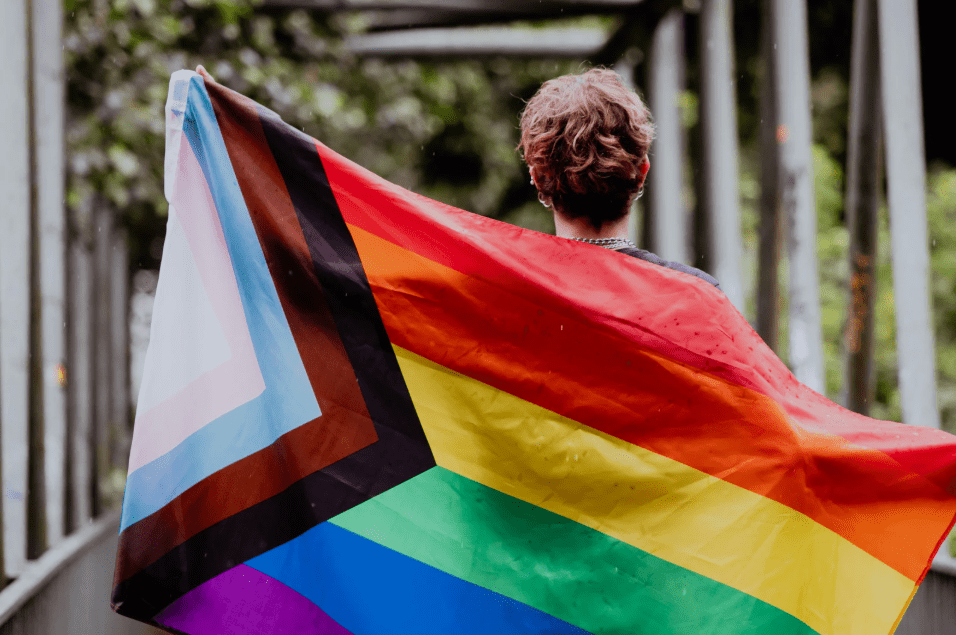
Every June like clockwork the music industry rolls out the rainbow carpet, LGBTQ+ flags appear over hundreds of corporate social medias and record labels publish ‘Pride playlists’ which mainly just include a newly created cover of a recycled single with brand new sparkly covers. Once the sparkles and glitter start to settle it opens up a very uncomfortable question: ‘Is Queer Visibility Just Another Box To Check?’
During Pride month it is exceedingly obvious that queer visibility is just a box to check for many record labels, embedded deep behind all of the social media campaigns and stage lights a truth is shown, queer musicians are frequently asked to ‘tone down’ their queerness or erase their identity and sexuality all together in order to ensure they are able to ‘make it’ in this industry. Instead of promoting and being proud of queer artists all year round, the industry often reduces queer artists as a pawn to use during pride month to further show that they are ‘inclusive’.
The industry still treats queerness as a risk to their image unless it can be monetised, artists being openly queer then quickly becomes a checkbox for their diversity quota. The moment the artist’s identity becomes ‘too raw’ or ‘too political’ such as an artist challenging gender norms or very visibly shows their queerness within their lyrics, the industry is essentially saying queerness is okay as long as it is packaged in a certain way and it is made into bite size pieces that is easy to consume.
Historically queerness within music lived in the shadows, artists such as George Michael and Freddie Mercury were beloved for their voices but their queerness was never prominent until long after their careers peaked, in some cases it was never truly shown until after they died. They were never ashamed of who they were but back then being openly queer within the music industry was classified as ‘Career Suicide’. Their legacy shows as a reminder of how long the industry has demanded silence, their impact still lives on today and remains foundational to queer music history.
The music industry today may appear a lot more inclusive on the surface, but if you dig deeper it reveals a tokenism pattern especially whenever it comes down to queer representation. The industry often selects a handful of queer artists during Pride Month to put them in the spotlight in their campaigns. These artists then quickly become ‘Brand Ambassadors’ and are often expected to carry the representation during Pride Month.
In the past years, queerbaiting accusations have become more prominent within the music industry, which raises yet another quite uncomfortable question: does queerbaiting exist within the music industry and if it does, who decides what crosses the line?
Queerbaiting usually refers to when marketers or artists suggest LGBTQ+ themes through branding, interviews and lyrics that frequently come along with little or no clear alignment if the artists LGBTQ+ identity which is okay as not all artists are ready to come out in the public eye so fast but you can tell when it is often used as a tactic just to attract a queer audience to avoid the artist going too mainstream.
It’s an issue that is hard to talk about as queerness is not always defined with ease, as sexuality and identity can be fluid. Nobody should be forced to publically label themselves but context matters in some sectors. Pop culture runs on artists who hint at them being queer such as lyrics about same sex relationships or very queer coded visuals within videos and then this raises red flags as most artists go silent on this issue when people start to notice nothing is truly spoken about in regards to sexuality or identity.
Many others argue that this is a marketing strategy that allows straight cisgender artists to continue to benefit from things queer people have set up such as aesthetics while real queer artists remain silenced. Queerbaiting may not always be intentional but the lines between artistic manipulation and ambiguity can be very blurry. When this happens queerness is treated as a ‘choice’ or an aesthetic compared to the reality real queer people face, it’s not just a performance it’s real life for hundreds of artists.
There is also the conversation of is there a gender bias within the queer music industry. Queer people who are cisgender, white as well as conventionally attractive seem to get a lot more visibility and recognition within music labels and they are more inclined to back an artist who’s queerness aligns with the heteronormative expectation of society, these artists do usually get sexualised or fetishized for more mainstream audiences. There are some artists that became successful while being openly queer throughout their career such as Girl In Red but they have expectations to ensure their sexuality is ‘presented’ in ways that are ‘relatable’ or palatable to please a broader spectrum of people, who are often heterosexual.
Queer men continue to face heightened scrutiny, like Lil Nas X is a very rare example of an openly gay man who achieved global fame and kept the stardom after publicly coming out as queer in 2019 and being unapologetically open about his sexuality. He is more treated as a provocation rather than a music artist.
Nonbinary and Trans artists face even greater barriers within the industry, they are rarely afforded the same luxuries and opportunities that other queer cisgender artists get such as festival slots or time in the spotlight, Transgender identities are often viewed as ‘too niche’ or ‘too political’ which further reinforces the idea that queerness is once again only acceptable when it conforms to certain expectations of gender presentation. Trans artists have to work almost twice as hard to be seen and heard as legitimate musicians, their work is dismissed and classified as ‘non-commercial’ which is a nicer coded way of saying their identities are too complex to understand for the mainstream media.
Why LGBTQ+ representation matters.
Music has always been a refuge for many queer people because at its core music has always been about connection through lyrics and knowing an artist who has gone through similar experiences as you it means a lot. When queer artists are allowed to exist as their true authentic selves especially in mainstream media it creates a safe space for other queer people to imagine a future where being your authentic self does not include having to compromise with society norms.
Representation in music matters as it disrupts the silence queer people experience, for years musicians were always present but were also hidden and almost made to be invisible. Queer music lived in subtext instead of the spotlight, artists such as Sam Smith have faced continued backlash since they started to live as their authentic self. Queer artists don’t just perform for a crowd, they perform and speak directly for the individuals who very rarely see themselves reflected on stage.
I have seen first hand how important queer visibility is within music, I also experience it whenever I see queer artists live. When you see someone who has gone through similar experiences to you and writes about it it helps you realise that you are not alone in the grand scheme of things. Queer representation also benefits non queer audiences, it helps demolish stereotypes and helps listeners rethink or understand some assumptions of the community they may have had before.
Music has always had the very unique ability to build empathy and connections, music speaks directly to people’s emotions and skips intellectual defences for many, true queer representation doesn’t mean using their identity as marketing tools one month out of the year it means letting queer people to tell their own stories and live their truth without having to dilute their identity to please others.
Pride Month is always a great time to diversify your playlist. Representation isn’t just reduced down to the music industry; it’s influenced by who we choose to support, listen to and share. Real Queer support comes from us not just record labels or the music industry and it goes far beyond the rainbow curated playlists for June, seek out queer artists all year round, go to shows, stream their music, buy merch and share their work with friends because you may end up finding your new favourite artist.
If you are unsure where to start you could dive into a personal favourite artist of mine called Kevin Atwater his album Achilles came out recently, his music fuses indie pop and R&B with deeply personal lyrics that explore themes such as queer love, self discovery and vulnerability his work feels very intimate and honest. Bears in Trees are another band you should get to know, they describe themselves as a ‘dirtbag boyband’ they blend indie rock and emo together with lyrics that tie into queer joy, identity and mental health. If you are seeking emotionally rich music. Another artist is The Japanese House is essential to listen to, this project includes Amber Bain who is a queer non binary artist, their music blends alt rock with synth pop and explores themes of identity, love and longing. Their lyrics explore same gender which is a perfect soundtrack for those trying to navigate the complex feelings of queer selfhood and intimacy.
If Queer Music is not seen as a genre, it’s a spectrum of survival told through their own personal stories and sound. When listeners actively seek out real queer artists with diverse voices it helps distract the industry’s priority of tokenism and turns it into real queer inclusion.
 Disloyal Order
Leave a comment