
When Clancy closed out the lore cycle earlier this year, it felt like the end of an era not just for Twenty One Pilots, but for an entire community that had been following the band’s intricate mythology for over a decade. The question that immediately hung in the air was simple but daunting: where do they go from here? How do you follow up a sprawling, narrative-heavy record that tied together years of storylines, symbols, and fan theories?
The answer, it turns out, is Breach, a record that doesn’t try to outdo its predecessor in scale or lore, but instead reshapes the band’s creative energy into something that feels both transitional and final, experimental and nostalgic, flawed and brilliant all at once.
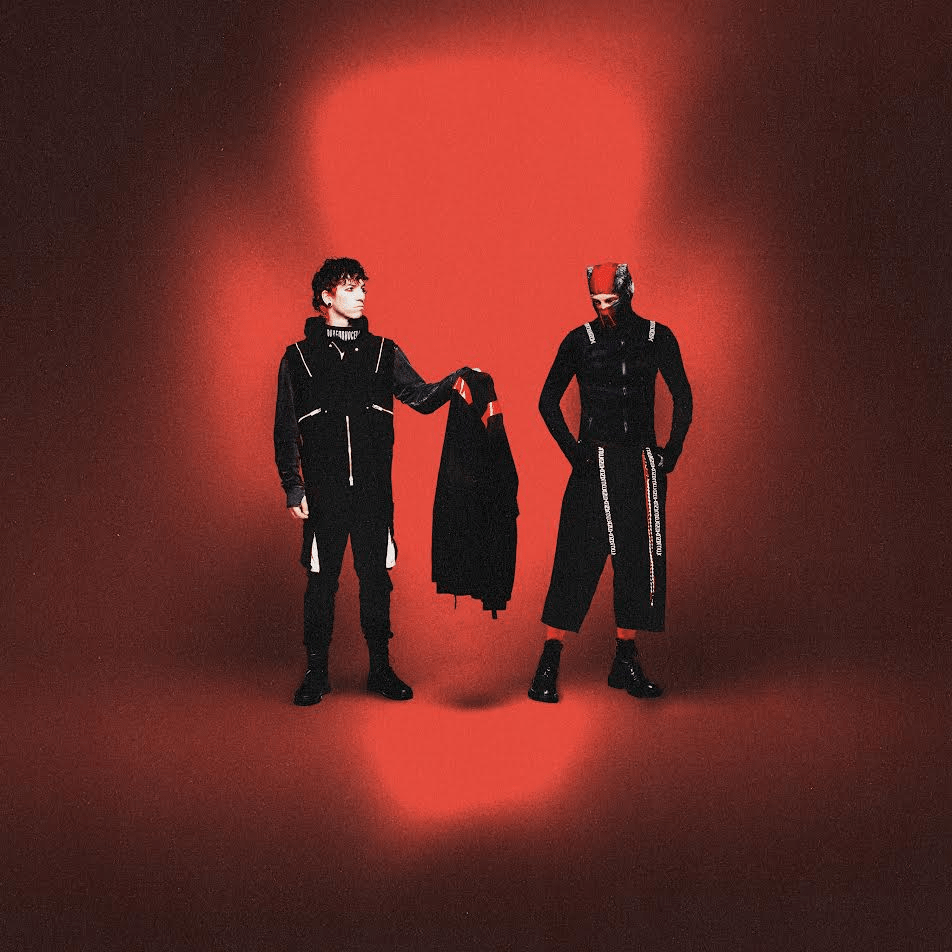
From the very first listen, it’s clear that Breach isn’t trying to be the next Clancy. Instead of dense storytelling and heavy metaphor, it pares things back lyrically while reaching for new heights in experimental sound. Tyler Joseph, who has long been celebrated for his ability to distil complicated feelings into metaphors or devastatingly direct one-liners, seems looser here. Some songs lean too heavily on repetition, others float on vaguer imagery that doesn’t quite hit with the same impact. That said, to focus solely on the words would be missing the bigger picture, because where Breach falters in lyrical sharpness, it kills it in its production.
The album’s sonic identity is nothing short of spectacular; it’s evident that Paul Meany’s fingerprints are all over this album, and the production is the best Twenty One Pilots have ever put to tape. Every texture feels intentional, from glitchy vocal effects to sweeping instrumentation that’s layered without ever being crowded. There’s a cinematic fullness to the album that makes even its simplest moments feel huge. It’s easily the best-produced record in the Twenty One Pilots catalogue, and Meany and Joseph deserves immense credit for finding this balance between clarity and chaos.
That balance is evident in the singles. Choosing The Contract and Drum Show as the record’s introduction to the world was genius; The Contract thrives on tension, its shifting dynamics keeping listeners on edge before exploding into moments of eerie calm and then back again. Drum Show, meanwhile, is relentless in its drive, a track that feels engineered to rattle stadium walls. But beyond its thunderous energy, it’s also home to one of the most talked-about moments in the band’s discography: Josh Dun finally stepping to the mic. The long-rumoured “jocals” appear in the bridge, and while brief, they’re a revelation. His voice is strong and emotive, carrying a bittersweet honesty that feels both surprising and inevitable. It’s the moment diehards have been dreaming of for years, and it leaves you wondering why it hasn’t happened sooner. Drummer, trumpet player, singer… Josh continues to prove there’s very little he can’t do.
The album opens with City Walls, paired with one of the most devastatingly heartfelt music videos the band has ever released. The $1 million video brings the curtain down on ten years of lore, delivering both closure and gratitude. The rolling credits honour the countless hands and minds that built the Twenty One Pilots universe, including the fans who have carried it every step of the way. It’s a rare and humbling acknowledgement that this project has always been a shared one, bigger than Tyler and Josh alone. Watching City Walls feels like being part of a communal goodbye, and it sets the tone for the album that follows: less about story, more about connection.
Two standouts, Rawfear and Days Lie Dormant, show the duality of the album. The former leans bright and pop-y, the latter rockier and theatrical with a key change that has split listeners between “corny” and “genius.” (As a former theatre kid, I’m firmly in the latter camp.) Both tracks nod back to Scaled and Icy and Trench in subtle but deliberate ways, making them feel familiar without being derivative.
Other tracks take longer to reveal their brilliance. Garbage is one such song, a track that initially felt awkward but has slowly emerged as one of the album’s gems. There’s a rawness to it, an unpolished edge that hits hardest in the bridge where Tyler’s vocals strip down to their most vulnerable. It’s the first real tear-jerker on the record, a song that feels like an anthem for the troubled, the restless, the misunderstood. It stings because it’s honest, and in that honesty it calls out listeners (me included!) in ways they may not have expected.
Then there’s Cottonwood, another emotional centerpiece. Its lyrics are devastatingly simple but profound: “I look back in time through a telescope / I’ve been catching my / I’ve been catching my / my reflection already looking.” It captures a sense of dislocation, of being suspended between regret for the past and dread of the future. Few lines in the band’s catalogue have so perfectly distilled the ache of nostalgia and self-awareness. Tyler’s delivery is one of his most affecting performances in years, and it cements the song as one of the album’s emotional peaks.
However, not every experiment lands. Robot Voices is the record’s strangest inclusion, and also the hardest to fully connect with. Its origin story is charming; Tyler stumbled across indie group Blanket Approval online, fell in love with one of their songs, and reached out to reshape it into a collaboration. He even ensured the band received proper credit, royalties, and publishing support, a generous move that speaks to the kind of artist he is. Yet within Breach, the track feels slightly disjointed, its quirks not entirely blending with the surrounding songs. It’s not bad, but it doesn’t resonate with the same emotional force as the rest of the album.
The record closes with Intentions, a track that might be brief with just over a two minute run-time, but carries the weight of the band’s history. Its instrumental is simply Truce, the quiet closer from Vessel, played in reverse. In doing so, it creates a perfect circle, linking back to the last album that pre-dated the lore. For long-time fans, the implications are staggering. It feels like a farewell, though to what exactly remains unclear. Is it a goodbye to the lore, to a certain sound, to a chapter of the band’s life? The ambiguity is part of the point. It’s hopeful, yes, but also unbearably sad.
And of course, being a Twenty One Pilots record, Breach is full of hidden treasures. There are lyrical call-backs to Migraine and Holding Onto You, a sample of the infamous viral video where Josh’s drum was stolen during the Manchester stop of the Clancy tour, and even a voicemail from Josh himself that bridges two songs together with warmth and humour. These Easter eggs aren’t just fan service (though they are very well placed); but reminders of how deeply the band’s past is interwoven with their present, how much history lies in even the smallest details.
Ultimately, Breach is not Clancy, and it’s not trying to be. Where Clancy was sprawling, deliberate, and thematically dense, Breach is rawer, looser, more willing to stumble in search of something new. Lyrically, it doesn’t match the band’s highest peaks, but musically, it’s among their most ambitious and fully realised work. It’s a record that may confound casual listeners but will reward the fans who’ve been here since the beginning; the ones who know every call-back, who pore over every lyric, who are willing to grow alongside a band that has travelled in so many directions through their vast career.

 Disloyal Order
Leave a comment